 Skip to content

Removing calluses: Foot care tips against calluses on the feet
Welcome to our detailed guide on the topic of removing calluses and the proper use of the Lopalmed hand and foot care box. Calluses on the feet are a common issue and occur as a natural protective reaction of the skin. With the right care, excess calluses can be gently reduced and the skin's appearance can be sustainably improved.
In this article, you will learn:
- how calluses form
- why aggressive methods are often not sensible in the long term
- what gentle callus care looks like
- how to properly use the Lopalmed hand and foot care box
- what role aftercare plays

What is callus?
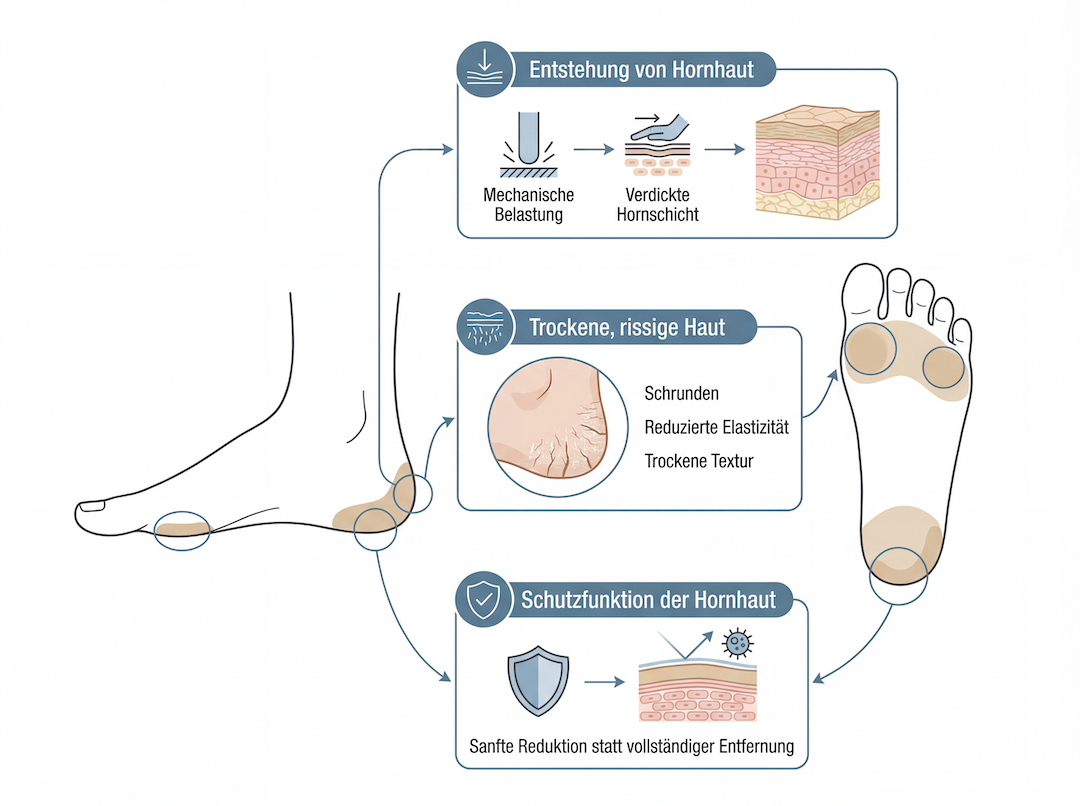
Callus is a thickening of the outermost skin layer. It forms where the skin is regularly exposed to pressure or friction, for example from standing for long periods, walking, or unsuitable footwear. The body produces more skin cells to protect itself. These cells harden and form a firm, rough skin layer. Callus on the foot is therefore initially a natural protective function.
Formation of Calluses on the Feet
The formation of calluses is usually due to repeated mechanical strain. Particularly affected are the heel, ball, forefoot, and toes. If calluses are treated aggressively on a regular basis, they can become thicker and harder over time. Many people notice that rough skin and calluses on the feet form again more quickly after mechanical callus removal.
Cracked and Dry Skin
Severe calluses often go hand in hand with dry skin. Especially on the heel, the skin loses elasticity, which can lead to cracked feet. These cracks, also called fissures, can be uncomfortable. Regular care with a suitable moisturising cream or cream with urea helps the skin to retain moisture and soothes cracked skin.
The Importance of Calluses
Calluses basically serve a protective function. The goal of good foot care is therefore not to remove calluses completely, but to reduce calluses and balance the skin’s appearance. Gentle callus removal helps to promote soft feet without irritating the skin or unnecessarily encouraging new growth.
Removing Calluses: Methods and Their Limits
Mechanical methods such as pumice stone, files, or scrapers remove calluses through rubbing or cutting. With too much pressure, the skin can become irritated or injured. Many users also report that calluses grow back faster and thicker after mechanical treatment.
Electric callus removers work with rotating grinding heads. They can be effective but also carry the risk of removing too much skin. Caution is especially advised for sensitive skin.
Professional medical foot care can be useful for severe hardenings or existing complaints. However, it does not replace regular care in everyday life.
Many turn to home remedies, pumice stones, or files to best remove calluses. These methods work mechanically and can irritate the skin. Electric callus removers also remove calluses with rotating attachments. They can be effective but carry the risk of removing too much skin.
When removing calluses, the rule is: the more aggressive the method, the greater the risk of cracked skin, rough skin, and faster regrowth. Professional medical foot care can be useful for severe complaints but does not replace regular foot care at home.
Products for easy callus removal at home
-
 Sale NEW: now with stainless steel scraper
Lopalmed Test Box PRO
Regular price 29,98€Regular priceUnit price per51,80€Sale price 29,98€You save: 42%
Sale -
Lopalmed Hand & Foot Care Box
Regular price 39,98€Regular priceUnit price per71,50€Sale price 39,98€You save: 44%
Sale -
 Sale
SaleLopalmed Premium Box
Regular price 69,98€Regular priceUnit price per178,80€Sale price 69,98€You save: 60%
Sale


The Lopalmed Hand and Foot Care Box – professional foot care for home use
The Lopalmed Hand and Foot Care Box was developed for cosmetic foot care at home. The goal is to gently soften hardened skin and carefully remove excess callus without applying mechanical pressure. The development of the products is based on many years of practical experience from foot care specialists trained in medical foot care, as well as daily work with a wide variety of skin conditions.
The products have also been tested on diabetics and are designed for cosmetic use. They do not replace medical or podiatric treatment but can serve as a supplementary care method for regular foot care at home.
Important prerequisite for correct use
❗️ For the use of the Lopalmed callus and cuticle remover lotion, it is crucial that the skin is completely dry. The feet should not be washed or bathed for at least 6 to 7 hours before treatment.
Callus can absorb moisture. If it has already been softened by water, it can absorb the lotion less well. As dry a callus as possible allows for a more even and effective action of the lotion.
Not only water plays a role here. Perspiration can also cause the callus to remain moist. In jobs or daily situations where the feet sweat heavily, the callus may still not be completely dry in the evening. In this state, the callus remover can work less effectively on the callus.
For this reason, it is recommended to carry out the treatment ideally in the morning after getting up, for example on weekends. Overnight the feet are not stressed, the callus can dry well, and this provides optimal conditions for the application.

Step-by-step use of the Lopalmed Hand & Foot Care Box
-
Keep your feet dry
Do not wash or bathe your feet for at least 6–7 hours beforehand. -
Prepare the cotton wool
Take a piece of cotton wool from the box and pull it apart into a thin layer. The cotton wool only serves as a carrier so that the lotion does not run. -
Place the cotton wool on the affected areas
Typical areas are the heel, forefoot, ball of the foot, little toe, tips of the toes or areas with pressure points or corns. -
Apply the lotion
Soak the cotton wool generously with the Callus & Cuticle Remover lotion. If the cotton wool becomes lighter again during the application time, you can add a little more lotion.
Optional: make the application time more comfortable
You can wrap your foot in cling film and pull a sock over it. -
Gently remove the calluses
After the application time, the calluses are softened and can be carefully pushed off with the blunt callus scraper. -
Wash and care for your feet
Only after removal are the feet washed, dried thoroughly and then moisturised.
Watch the insightful explanatory video by founder Ingo Lieberum:
Aftercare and long-term foot care
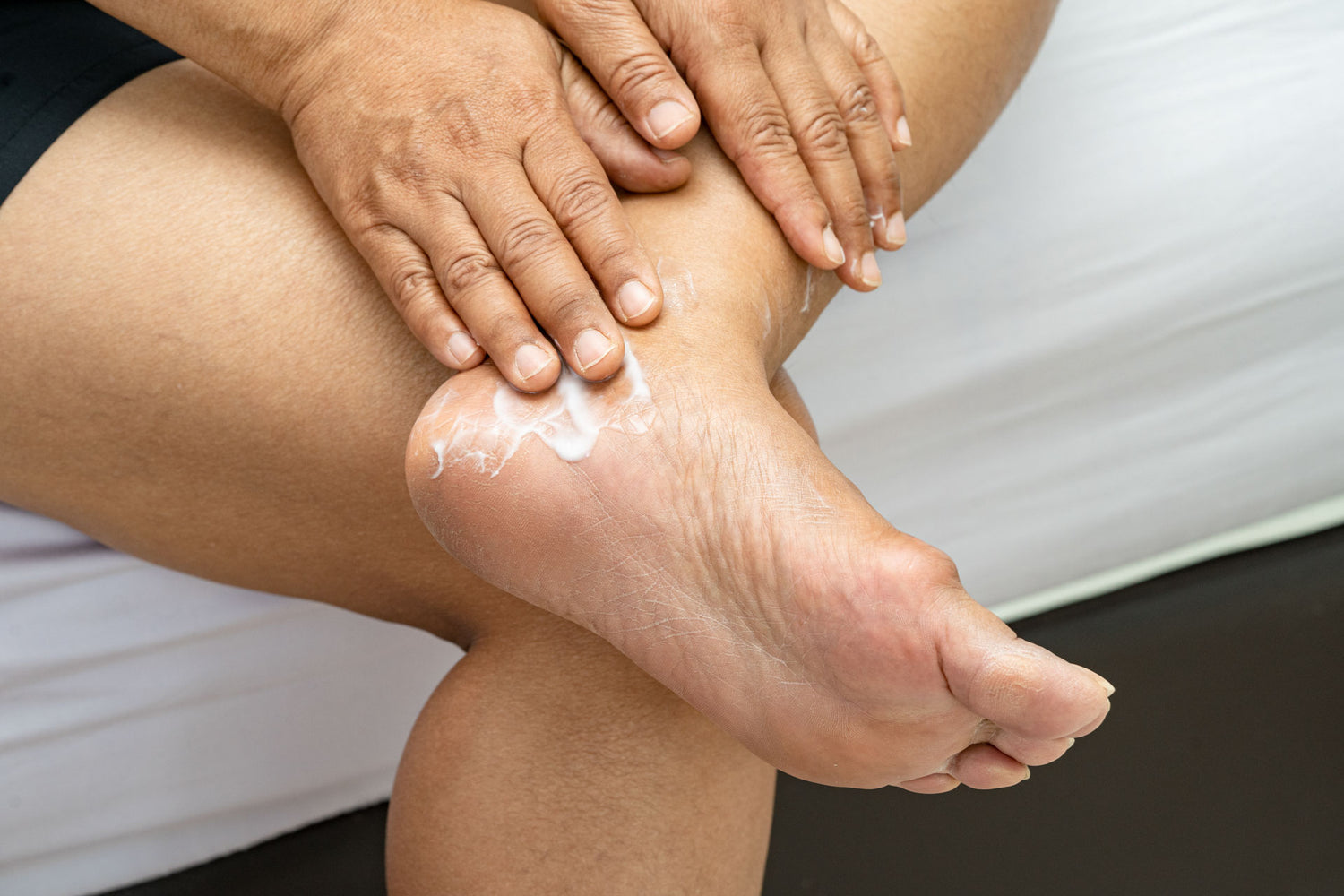
Aftercare plays a central role in maintaining a lasting well-groomed skin appearance. The Lopalmed Body Cream is especially well suited for use in the morning. It supports the skin in regenerating and rebuilding itself, promotes a supple skin feeling, and helps to preserve the skin’s natural elasticity. Regular use can help the skin feel more balanced overall and be less prone to hardening.
Additionally, the Lopalmed Callus-Reducing Cream can ideally be applied in the evening. With regular use, it helps the skin reduce the formation of new calluses and sustainably soften existing hard skin. At the same time, it contributes to supporting the skin’s regeneration and counteracting renewed hardening.
For the prevention of severe callus formation, a combination of the following is recommended:
- well-fitting, comfortable footwear
- regular and consistent foot care
- avoiding constant pressure and friction
A proven care routine is:
- in the morning, the Lopalmed Body Cream for regeneration, building up, and maintaining suppleness and elasticity
- in the evening, the Lopalmed Callus-Reducing Cream to support skin regeneration and reduce new callus formation
This coordinated care can help improve the skin condition of the feet in the long term and reduce the overall care effort.
Personal Experience and Development of Lopalmed
The Lopalmed Hand and Foot Care Box was created from many years of practical experience of foot care specialists trained in medical foot care. The goal was to develop a gentle, user-friendly, and safe care method for home use that fits well into everyday life and supports the skin condition of the feet.

You might also be interested in this
-

Calluses on feet and hands can be uncomfortable and painful. They usually result from friction and pressure, such as wearing tight shoes or engaging in manual labor. Fortunately, there are...
Which home remedy removes calluses? The best na...
Calluses on feet and hands can be uncomfortable and painful. They usually result from friction and pressure, such as wearing tight shoes or engaging in manual labor. Fortunately, there are...
-

Calluses on the hands can be both unsightly and uncomfortable, especially for those who work a lot with their hands, whether in a profession or sports. If you're wondering how...
How to Remove Calluses on Hands: A Comprehensiv...
Calluses on the hands can be both unsightly and uncomfortable, especially for those who work a lot with their hands, whether in a profession or sports. If you're wondering how...
-

Calluses are a common but bothersome problem for many people. They form as a skin reaction to pressure or friction, particularly on the feet and hands. Fortunately, there are effective...
How to Prevent Calluses: Tips for Smooth Skin o...
Calluses are a common but bothersome problem for many people. They form as a skin reaction to pressure or friction, particularly on the feet and hands. Fortunately, there are effective...


